If you are searching for the best dive sites in the Maldives, you have come to the right place. First and foremost, this breathtaking archipelago is widely regarded as one of the top diving destinations on the entire planet.
However, with hundreds of dive sites spread across 26 atolls, knowing exactly where to dive can feel overwhelming, particularly if you are visiting for the first time.
Therefore, whether you are a complete beginner strapping on a tank for the first time or an experienced diver chasing pelagic encounters, this guide to the best dive sites in the Maldives will help you plan the ultimate underwater adventure.
Why the Best Dive Sites in the Maldives are world Class
Before diving into the best sites, it is worth understanding why the Maldives consistently ranks among the world’s top dive destinations. First of all, the geography is unlike anywhere else on earth. The Maldives is made up of 26 atolls, each containing dozens of individual islands, coral reefs, channels, and submerged pinnacles that create an extraordinary variety of dive environments.
Additionally, the water temperature is warm year round, ranging between 27°C and 30°C, which means no thick wetsuit is required. Furthermore, visibility regularly reaches 20 to 30 metres during peak season, making every dive a visual feast. Consequently, the combination of warm clear water, extraordinary biodiversity, and dramatic underwater terrain makes the Maldives a bucket list destination for divers worldwide.
Moreover, the Maldives is home to over 1,100 species of fish and more than 200 species of coral. As a result, whether you want to drift alongside manta rays, come face to face with whale sharks, or simply explore vibrant coral gardens teeming with reef fish, the Maldives delivers every single time.
Understanding Maldives Dive Site Types
Before exploring the best dive sites in the Maldives, it helps to understand the different types of dive environments you will encounter:
Thila
Submerged coral pinnacles that rise from the ocean floor without reaching the surface. They are consequently some of the most exciting dive sites in the Maldives, attracting enormous concentrations of marine life including sharks, rays, and schooling fish.
Kandu
Ocean channels that connect the open ocean to the inner lagoon of an atoll. Therefore, they create powerful currents that attract large pelagic species making them ideal for drift diving.
Giri
Coral outcrops that reach the surface and are generally shallower and calmer. As a result, they are perfect for beginners and snorkelers.
House Reefs
Coral reefs located directly adjacent to a guesthouse or resort, accessible without a boat. Furthermore, many of the best house reefs in the Maldives rival dedicated dive sites for marine life diversity.
Wrecks
Sunken vessels that have over time become artificial reefs teeming with marine life. Additionally, the Maldives has several historically significant wrecks that are well worth exploring.
Best Dive Sites in the Maldives by Atoll
Kaafu Atoll – North and South Male Atoll
Kaafu Atoll is the most accessible atoll for most visitors since it surrounds the capital Male. Consequently, it is also home to some of the most famous and well-established dive sites in the Maldives. Among the best dive sites in the Maldives, Kaafu Atoll stands out as the most accessible for most visitors since it surrounds the capital Male.
Manta Point – Lankan Finolhu
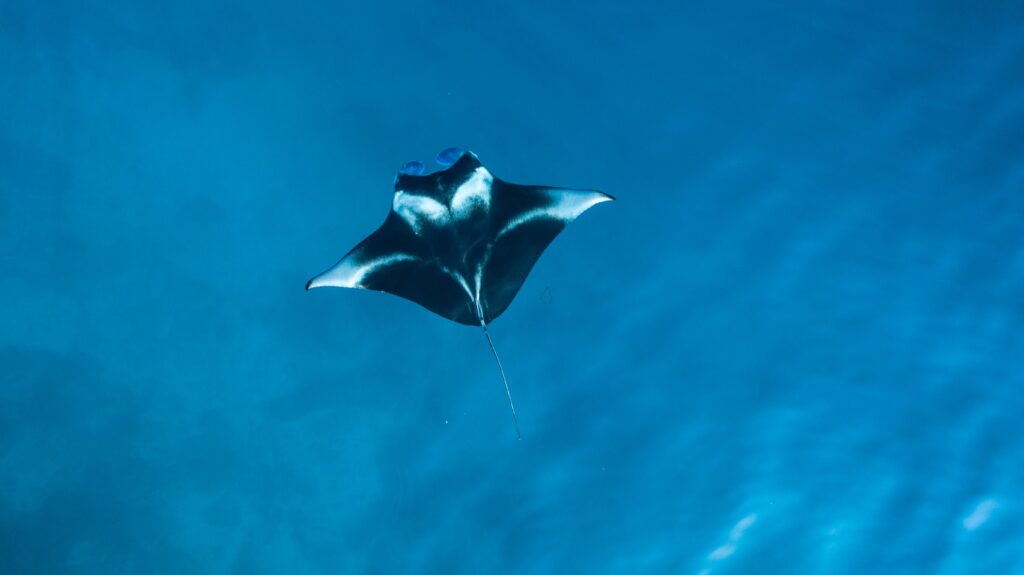
Without question, Manta Point is one of the most iconic dive sites in the entire Maldives. Located off the island of Lankan Finolhu in North Male Atoll, this famous cleaning station attracts large numbers of reef manta rays, particularly between December and April. Therefore, if seeing manta rays is on your bucket list, this site should be at the top of your dive plan.
- Depth: 5 – 30 metres
- Best Season: December – April
- Level: All levels
Banana Reef
As one of the first dive sites ever discovered in the Maldives, Banana Reef holds a special place in diving history. Furthermore, it more than lives up to its legendary reputation. The site features dramatic overhangs, caves, and crevices covered in vibrant soft corals, along with an impressive array of reef fish including napoleon wrasse, grouper, and moray eels.
- Depth: 10 – 30 metres
- Best Season: November – April
- Level: Intermediate
HP Reef – Rainbow Reef
HP Reef, also known as Rainbow Reef, is famous for its extraordinary display of multi-coloured soft corals. Moreover, the sheer density of marine life here is remarkable – schools of oriental sweetlips, trevally, and snappers swirl around the pinnacle while white tip reef sharks patrol the deeper sections.
- Depth: 10 – 35 metres
- Best Season: November – April
- Level: Intermediate
Ari Atoll – The Dive Heart of the Maldives
Ari Atoll contains some of the most celebrated of all the best dive sites in the Maldives, particularly for whale shark encounters, making it an absolute must for serious divers.
Maaya Thila
Maaya Thila is consistently rated as one of the top ten dive sites in the world and for very good reason. This submerged pinnacle in South Ari Atoll rises from around 30 meters to just 6 meters below the surface, creating a dramatic dive environment packed with marine life at every depth. Moreover, night dives here are legendary, white tip reef sharks become extremely active after dark, hunting across the reef in a mesmerizing display. Depths range from 6 to 35 meters and intermediate to advanced experience is recommended.
- Depth: 6 – 35 metres
- Best Season: Year round
- Level: Intermediate – Advanced
Whale Shark Point
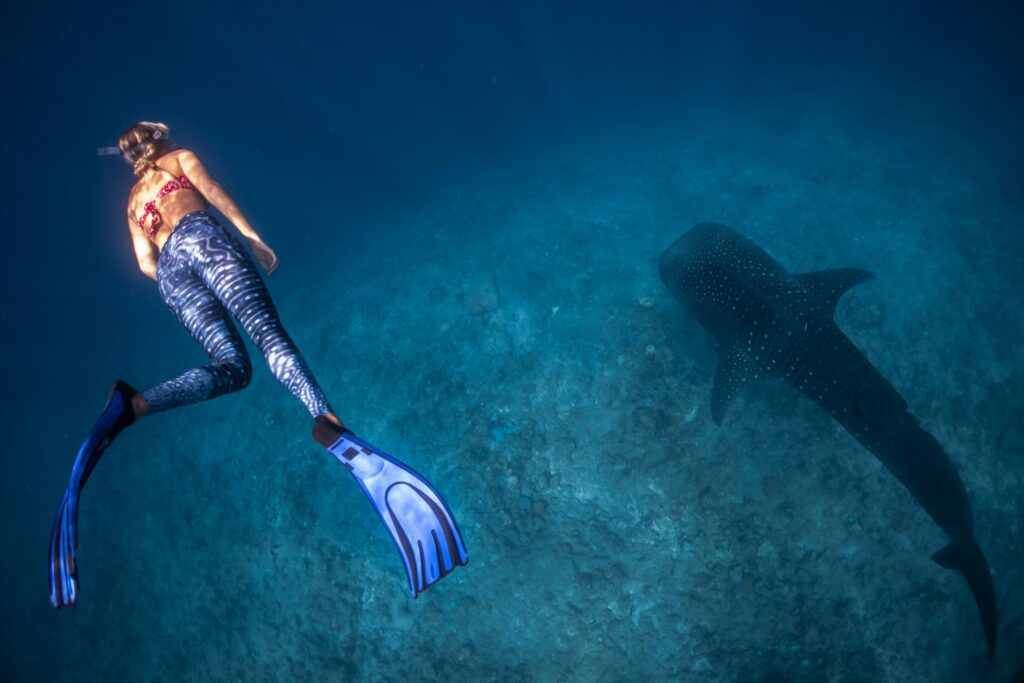
Ari Atoll is the best place in the Maldives, and arguably the world, to dive with whale sharks. Additionally, unlike most locations where whale shark sightings are seasonal, whale sharks are present in Ari Atoll year round due to the high concentration of plankton in these waters. The most reliable sightings are between January and April. Consequently, a dive or snorkel with a whale shark here is one of the most extraordinary wildlife encounters on the planet.
- Depth: 5 -30 metres
- Best Season: Year round, peak Jan – Apr
- Level: All levels
Broken Rock
As the name suggests, Broken Rock features a dramatic canyon formation carved through the reef. Furthermore, the crevices and overhangs created by this geological split are home to nurse sharks, moray eels, and lionfish. The sheer visual drama of swimming through the canyon makes this one of the most photogenic dive sites in Ari Atoll.
- Depth: 15 – 30 metres
- Best Season: Year round
- Level: Intermediate
Baa Atoll – UNESCO Biosphere Reserve
Baa Atoll was designated a UNESCO Biosphere Reserve in 2011 and it is not difficult to understand why. Therefore, it represents some of the most pristine and protected marine environments in the entire Maldives.
Hanifaru Bay
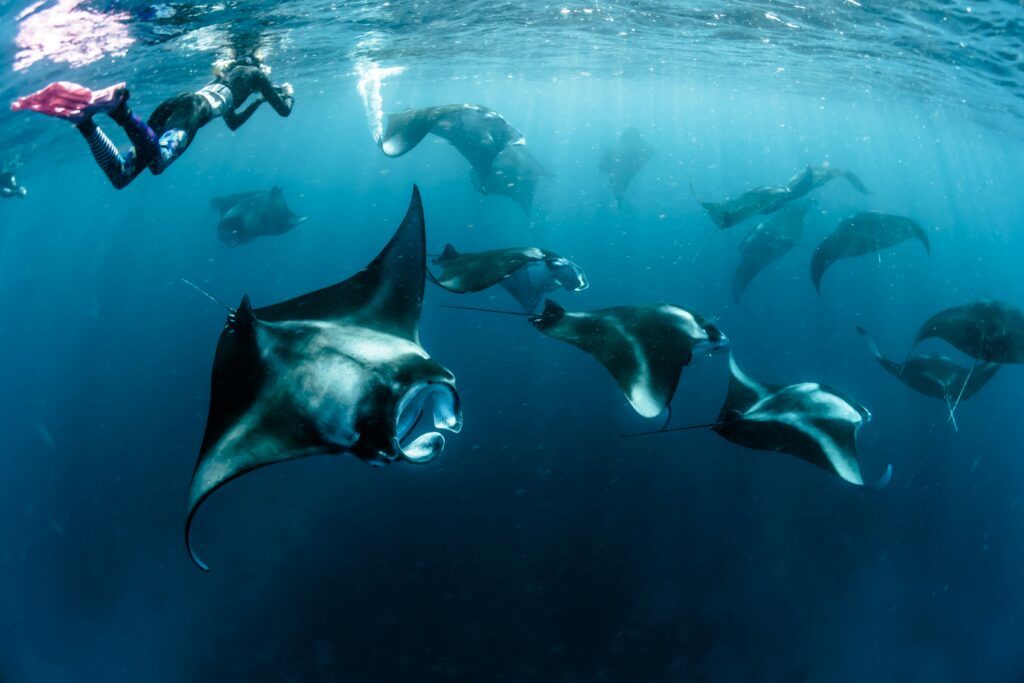
Hanifaru Bay is simply one of the most extraordinary marine spectacles on earth. Between June and November, this small bay in Baa Atoll becomes a mass feeding ground for manta rays and whale sharks, with aggregations of up to 200 manta rays recorded at a single time. Consequently, it is widely considered the best place in the world to witness manta rays in their natural environment. However, it is important to note that Hanifaru Bay is a protected marine area and diving is restricted – snorkeling is the primary way to experience it. Furthermore, access is strictly regulated to protect marine life, so always book through a licensed operator.
Nelivaru Haa
For divers seeking the thrill of hammerhead shark encounters, Nelivaru Haa in Baa Atoll is one of the best sites in the Maldives. Furthermore, the channel currents here attract large schools of hammerheads.
- Depth: 15 – 30 metres
- Best Season: June – November
- Level: Advanced
Vaavu Atoll – The Unspoiled Atoll
Vaavu Atoll remains one of the least visited atolls in the Maldives, which consequently means the dive sites here are refreshingly uncrowded and pristine.
Fotteyo Kandu
Fotteyo Kandu is considered by many experienced divers to be the single most spectacular drift dive in the Maldives. The channel walls are covered in enormous sea fans and soft corals while the open water teems with pelagic species including grey reef sharks, eagle rays, and large schools of trevally. Furthermore, the current here can be powerful, making this suitable for advanced divers only. However, for those with the experience to handle it, Fotteyo Kandu is an absolutely unforgettable dive.
- Depth: 10 – 40 metres
- Best Season: May – November
- Level: Advanced
Alimatha Jetty – Best Night Dive in the Maldives
If you do only one night dive in the Maldives, make it Alimatha Jetty. Additionally, this legendary night dive site is famous for the extraordinary gathering of nurse sharks and stingrays that congregate under the jetty after dark, attracted by the lights and the fish scraps from the kitchen. The sheer number of sharks and rays present on a good night makes this one of the most thrilling diving experiences in the country.
- Night Dive: 5 – 15 metres
- Best Season: Year round
- Level: All levels
Miyaru Kandu – Shark Channel
Miyaru Kandu translates directly to Shark Channel in the local Dhivehi language – and it absolutely lives up to its name. Furthermore, grey reef sharks are present here in large numbers particularly during the incoming tide when they gather at the channel entrance.
- Depth: 15 – 35 metres
- Best Season: May – November
- Level: Intermediate
Lhaviyani Atoll
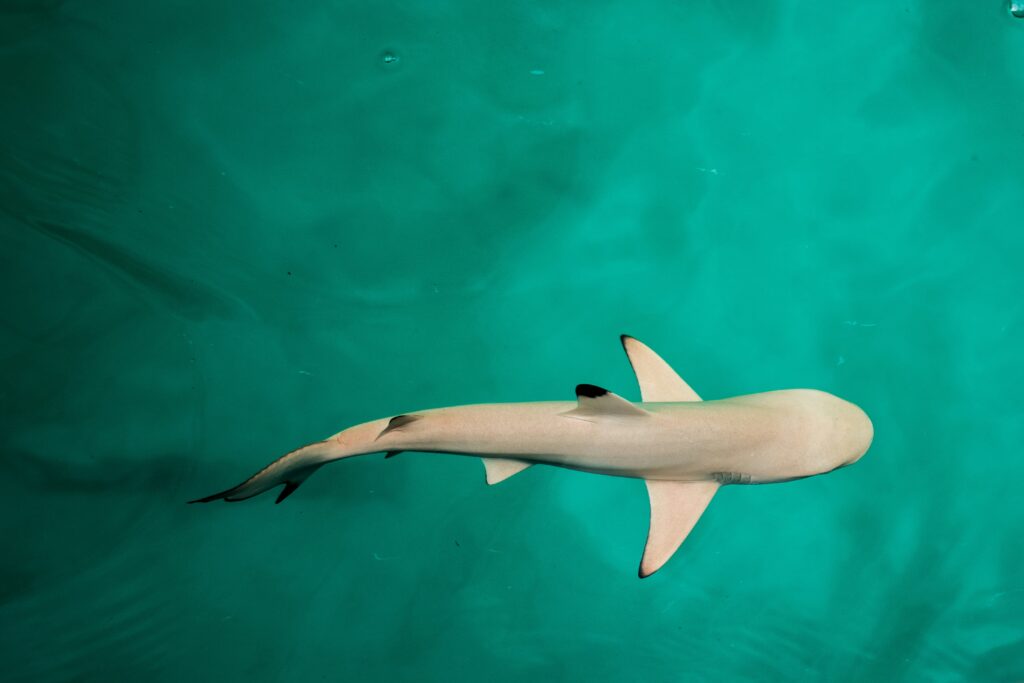
Lhaviyani Atoll is home to some of the most beautiful coral formations in the Maldives. Additionally, it remains relatively off the beaten path compared to Ari and Male Atolls, consequently offering a more peaceful diving experience.
Fushivaru Thila
Fushivaru Thila is consistently rated as one of the most visually stunning dive sites in the Maldives. The pinnacle is draped in breathtaking soft corals of every colour while enormous schools of fish swirl around the structure in mesmerizing formations. Furthermore, the presence of nurse sharks, eagle rays, and napoleon wrasse makes every dive here exceptional.
- Depth: 10 – 30 metres
- Best Season: November – April
- Level: Intermediate
Kuredu Express
For adrenaline seeking divers, Kuredu Express is a high octane drift dive through a fast moving channel. Moreover, the speed of the current here is such that divers can cover enormous distances effortlessly, swept past coral walls and through clouds of fish. For experienced drift divers it is one of the most exhilarating dives in the entire Maldives.
- Depth: 10 – 30 metres
- Best Season: May – November
- Level: Advanced
Addu Atoll – The Southernmost Atoll
Addu Atoll sits at the very southern tip of the Maldives and consequently feels like a completely different world from the busy Male atolls. Furthermore, it is home to one of the most historically significant dive sites in the country.
British Loyalty Wreck
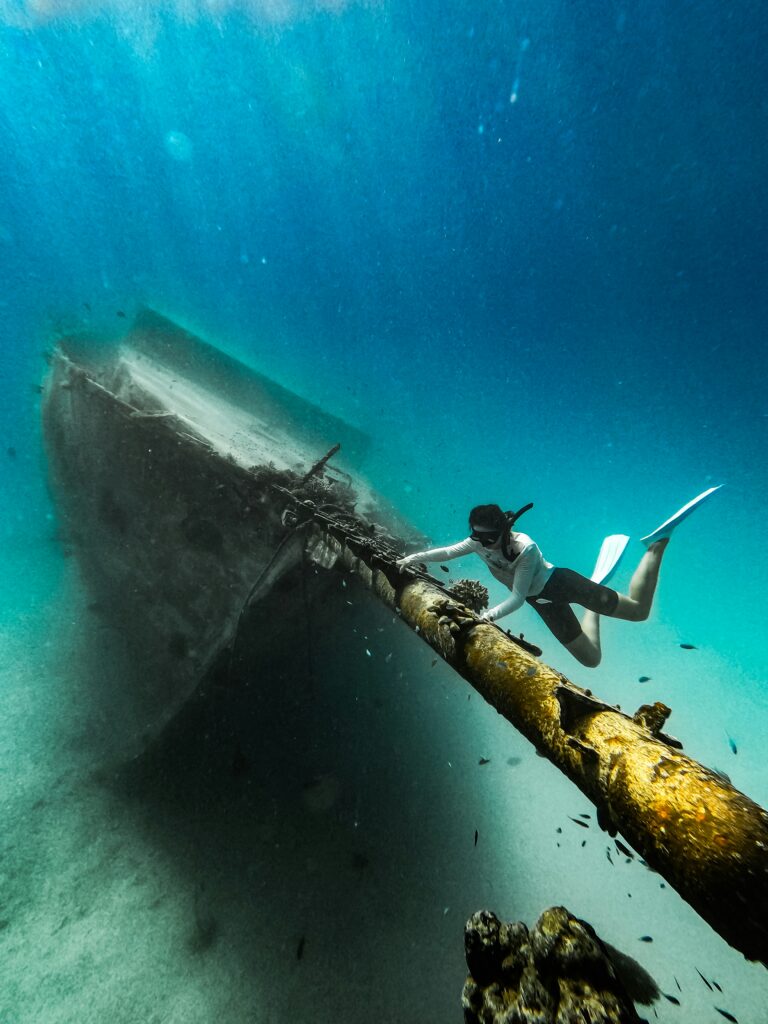
The British Loyalty is a World War II era British oil tanker that was torpedoed in 1944 and now rests at a depth of 15 to 33 meters in Addu Atoll. Over the decades it has transformed into a spectacular artificial reef, encrusted with corals and teeming with fish life. Moreover, the sheer scale of the wreck, at over 140 meters long, makes it one of the most impressive wreck dives in the entire Indian Ocean. Additionally, the historical significance of this site adds an extra dimension to every dive.
- Depth: 15 – 33 metres
- Best Season: November – April
- Level: Intermediate – Advanced
Diving for Beginners in the Maldives
One of the most common questions about diving in the Maldives is whether it is suitable for beginners. The answer is a resounding yes. Therefore, if you have never dived before, the Maldives is actually one of the best places in the world to learn.
Most dive operators on local islands and resorts offer the PADI Discover Scuba programme which allows complete beginners to experience diving in a controlled shallow environment without any prior certification. Furthermore, for those who want to get fully certified, the PADI Open Water Course typically takes three to four days.
The best beginner friendly dive sites in the Maldives are house reefs, which are calm, shallow, and packed with marine life. Additionally, sites like Manta Point and Banana Reef are accessible to beginners on calmer days. However, always follow your dive guide’s advice about site suitability on the day of your dive as conditions can change.
For those looking to get certified before their trip, the PADI official website is the best place to find a certified dive center and course options.
Diving Costs in the Maldives
Understanding the cost of diving in the Maldives helps you plan your budget effectively. Furthermore, by choosing the right operator and booking strategy you can significantly reduce your diving expenses.
| Dive Activity | Typical Cost |
| Single fun dive | $50 — $80 |
| Two tank dive | $80 — $120 |
| Dive package (10 dives) | $400 — $600 |
| PADI Open Water Course | $400 — $600 |
| PADI Advanced Open Water | $350 — $500 |
| Night dive | $60 — $90 |
Money saving tips for diving in the Maldives:
- Always book dive packages rather than single dives as the saving is significant
- Use local island dive operators rather than resort dive centers which charge premium prices
- Travel during the off season between May and October for lower rates• Join group dives rather than booking private guided dives
Best Time to Dive in the Maldives
The Maldives can be dived year round however the experience varies significantly between seasons. Therefore understanding the seasonal patterns helps you plan the perfect dive trip.
November to April – Dry Season
This is the peak diving season and consequently the most popular time to visit. Visibility is at its best, often exceeding 25 meters, seas are calm, and currents are generally gentler making it ideal for beginner and intermediate divers. Furthermore, manta ray encounters at sites like Manta Point are most reliable during this period.
May to October – Wet Season
While this period brings more rain and stronger currents, it is consequently the best time to see some of the most spectacular marine life. Hanifaru Bay’s legendary manta aggregations peak between July and October. Additionally, hammerhead shark sightings increase significantly during this period. Moreover, dive prices are considerably lower during the wet season making it an attractive option for budget conscious divers.
Responsible Diving in the Maldives
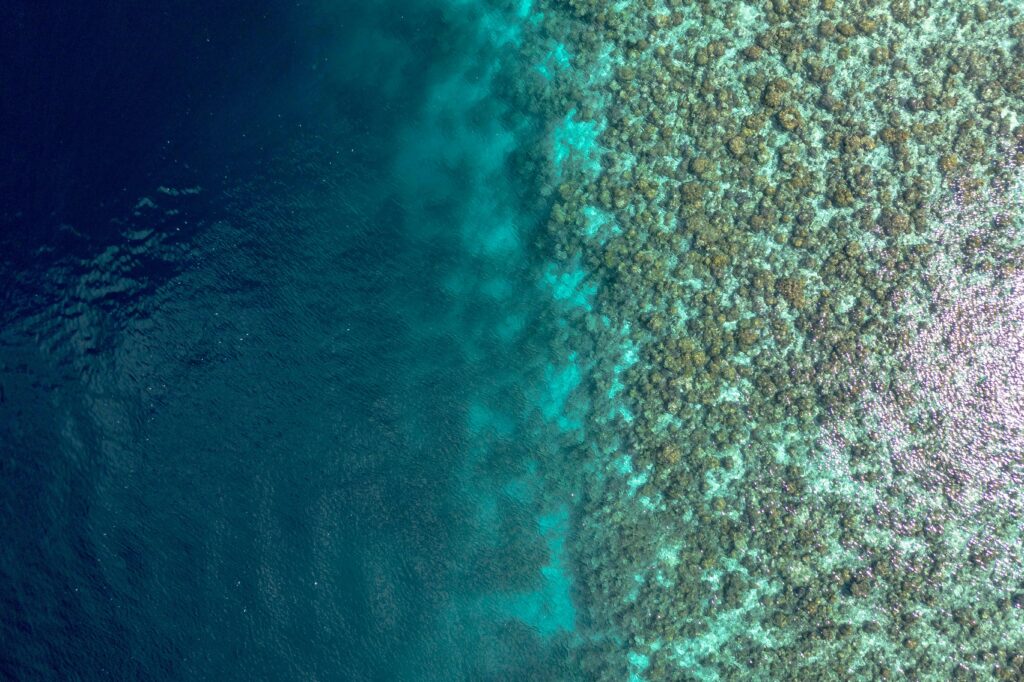
The extraordinary marine environment of the Maldives is fragile and every diver has a responsibility to protect it. Therefore always follow these essential responsible diving guidelines:
- Never touch coral or any marine life under any circumstances
- Always use reef safe sunscreen before entering the water
- Maintain perfect buoyancy at all times to avoid accidentally damaging the reef
- Never chase, ride, or harass marine animals including whale sharks and manta rays
- Always choose dive operators who follow environmental best practices
- Report any coral bleaching or damage to your dive operator
- Support local marine conservation initiatives where possible
Final Thoughts on the Best Dive Sites in the Maldives
The Maldives offers a diving experience that is truly in a class of its own. Furthermore, from the legendary manta ray gatherings at Manta Point and Hanifaru Bay to the adrenaline of drift diving through Fotteyo Kandu and the historical wonder of the British Loyalty wreck, there is a dive site here for every level and every interest.
Moreover, the best dive sites in the Maldives reward divers who take the time to plan carefully, choose the right season, and dive with reputable local operators. Therefore whether you are planning your first ever dive or adding another world class destination to your logbook, the Maldives will exceed every expectation.
Additionally, as someone who calls the Maldives home, I can tell you with complete confidence that no photograph or description does justice to what awaits beneath the surface. Consequently the only way to truly understand why the best dive sites in the Maldives draw divers back year after year is to get in the water and experience them for yourself.
Ready to plan your trip? Read our Maldives Budget Travel Guide and Maldives Travel Tips for everything you need to know before you go.
1. Is the Maldives good for beginner divers?
Yes, absolutely. The Maldives is one of the best places in the world to learn to dive. Many sites are shallow and calm, particularly house reefs, and most dive operators offer PADI beginner courses. Furthermore, the extraordinary marine life means even the most basic beginner dives are unforgettable experiences.
2. What is the best atoll for diving in the Maldives?
Ari Atoll is widely considered the best overall diving atoll in the Maldives due to its year round whale shark encounters and diverse dive sites suitable for all levels. However, Baa Atoll is unbeatable for manta ray aggregations between June and November.
3. How much does diving cost in the Maldives?
A single fun dive typically costs between $50 and $80. However, booking a dive package of 10 dives brings the cost down significantly to around $400 to $600. Furthermore, using local island dive operators rather than resort dive centers can save you considerably.
4. Can you dive with whale sharks in the Maldives?
Yes. Ari Atoll is one of the best places in the world for whale shark encounters and sightings are possible year round. Additionally, the best months for reliable whale shark diving are between January and April when conditions are optimal.
5. What is the best time of year to dive in the Maldives?
November to April is the peak diving season with the best visibility and calmest conditions. However, May to October offers spectacular pelagic encounters including manta ray aggregations at Hanifaru Bay and hammerhead sharks in Baa Atoll.
6. Do I need a diving certification to dive in the Maldives?
A certification is required for most fun dives. However, if you are not yet certified, most dive operators offer the PADI Discover Scuba programme which allows beginners to experience diving without prior certification. Furthermore, the full PADI Open Water Course can be completed in the Maldives in three to four days.
7. What marine life can I see diving in the Maldives?
The Maldives offer extraordinary marine biodiversity. Consequently you can encounter whale sharks, manta rays, hammerhead sharks, grey reef sharks, eagle rays, sea turtles, napoleon wrasse, moray eels, and thousands of species of reef fish across different sites and seasons.
8. How do I choose a good dive operator in the Maldives?
Always choose a PADI or SSI certified dive operator with qualified instructors and well maintained equipment. Furthermore, read recent reviews, ask about their environmental practices, and check that they follow responsible diving guidelines around marine life. Additionally, local island dive operators often provide a more personal and authentic experience than large resort dive centers.